.svg)


Every Sunday, churches all over the world carry the same responsibility: creating space for people to encounter Jesus.
Behind the lights, screens, sound systems, and cables, there is a quieter calling at work. Sunday programming is not about impressing people with production. It is about removing distractions so nothing stands in the way of transformation.
At VOUS, our production philosophy begins here: technical excellence is never the goal. It is the tool.
Before we go deeper into the systems and purpose behind Sunday production at VOUS, you may remember that we first began this conversation years ago in a two-part series titled The Road to Sunday.
Those articles laid the groundwork for how we think about planning and serving the Church with excellence:
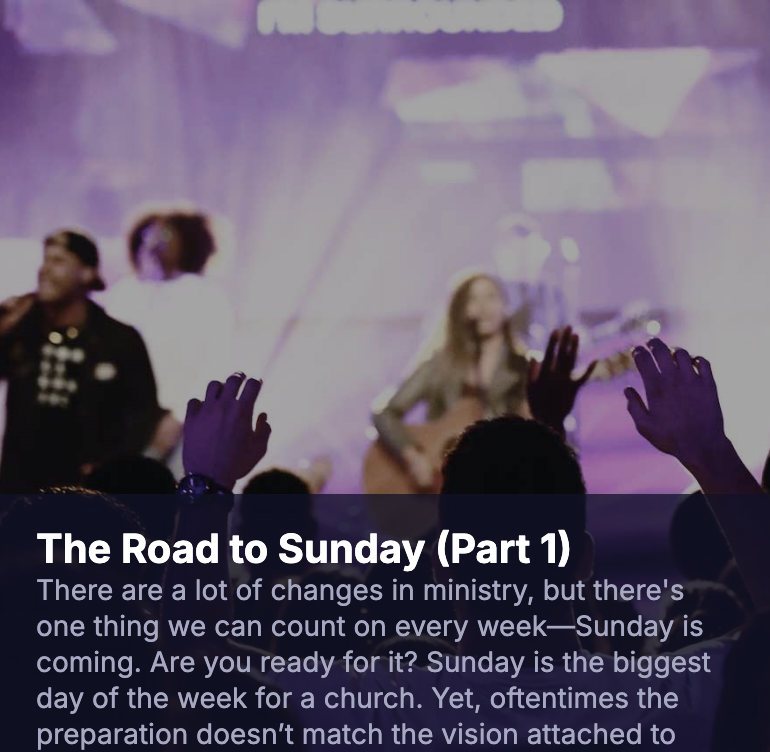
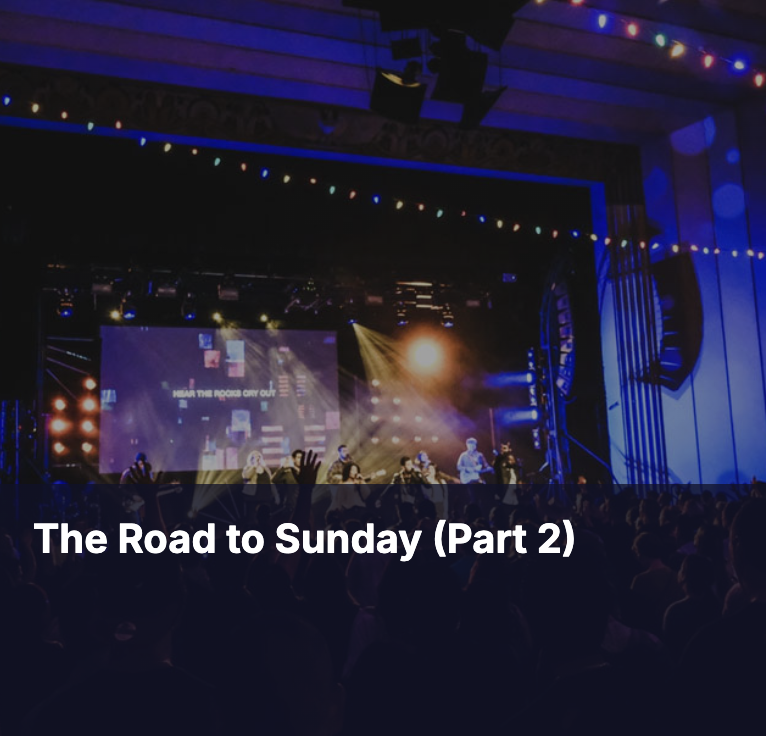
This current article builds on that foundation and moves the conversation into the technical side of Sunday programming, exploring how intentional planning, signal flow, and communication support the sacred work happening every weekend. If you haven’t read those previous articles, they provide valuable insight into our overall philosophy and are a great accompaniment to this piece.
The Purpose Behind the Process
When asked what matters most beyond flawless execution, the answer is simple and deeply spiritual. The primary goal of Sunday programming is to bring people who are far from God close to Him. Technical excellence exists to create a distraction-free environment. Not because perfection is the standard, but because moments of life change deserve focus.
Here at VOUS, the production team carries a unique responsibility. Much of their work goes unseen, and in many ways, that is the goal. When production is done well, technology fades into the background, allowing people to be fully present in worship, the Word, and the work of the Holy Spirit.
Some of the most formative lessons for our production team, however, were not learned on flawless Sundays. They were learned through moments of disruption. Three Sundays in a row, something went wrong. From power failures and internet issues to missed moments, our team quickly learned and adjusted. And yet, each of those Sundays ended with people sharing how meaningful the worship experience had been.
The reminder was clear: The Holy Spirit does not need a screen to move. He is faithful regardless. Production does not replace the Spirit, it serves the moment He is already working in.
That truth sits underneath every diagram, cable, and system we build.
When Production Enters the Planning Conversation
Production is not something that happens on Sunday morning, it is the result of intentional planning long before the room fills.
At VOUS, production becomes involved whenever the flow of a Sunday requires something beyond the norm. This could include a mid-sermon video, a live-to-playback transition, or a creative moment that shifts how content is delivered.
Even on a “typical” Sunday, preparation matters. Graphics, lyrics, motion backgrounds, videos, and service flow are planned in advance and communicated clearly. Timing is especially critical when one message is being delivered across multiple locations. Live services, playback services, and online streams all need to remain aligned so the day runs smoothly. Even a few minutes of delay can make the difference.
Production relies on clear information from programming, worship, and creative teams. The team utilizes tools like Planning Center to help outline the flow, timing, and transitions so production can build the systems needed to support the service.
The goal is to ensure that what happens on stage is supported with confidence behind the scenes.
Understanding the Flow: Why Documentation Matters
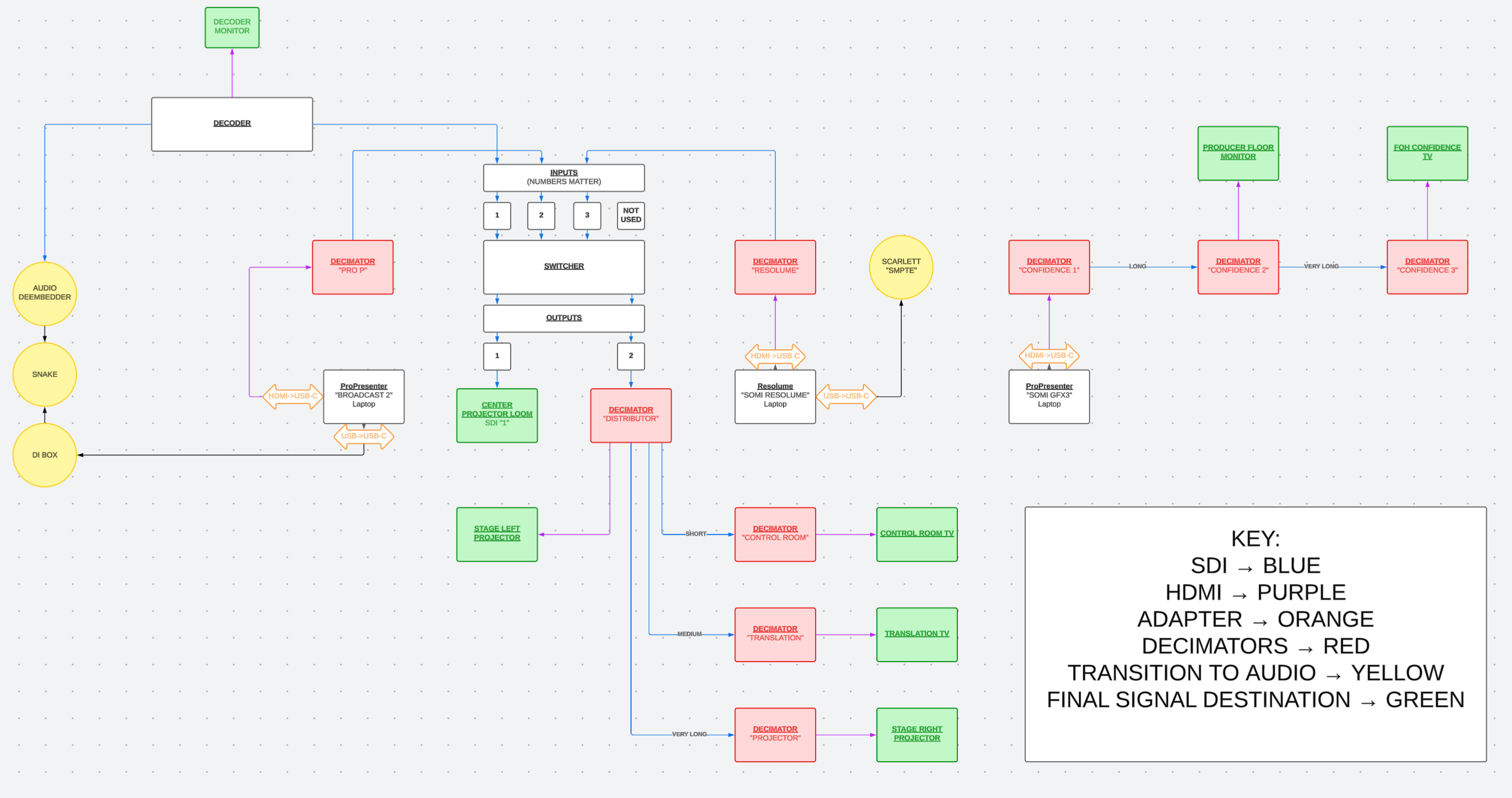
One of the most valuable tools in Sunday production is not a piece of equipment, it is a diagram. The flow chart provided by the production team exists to answer one simple question: how does a signal move from a laptop to a screen?
At a high level, the diagram shows where content originates, how it travels, and where it ultimately lands. It maps laptops, projectors, monitors, converters, and distribution points so anyone can trace the path.
The most important takeaway is not memorizing equipment names. It is understanding function.
A decimator, for example, is simply a signal converter. HDMI and SDI are two different ways of transporting video. HDMI works well over short distances, while SDI allows signals to travel much farther. When a screen cannot read a signal, a converter bridges the gap.
Documenting signal flow does not prevent issues from happening on Sunday, it helps solve them faster. When something fails, teams are not guessing. They are tracing the path, checking only what is relevant, and addressing the problem with clarity instead of panic.
Documentation also empowers others to step in when needed, and production should never be dependent on one person. Instead, systems should be teachable, repeatable, and understandable.
Designing Systems That Serve People
Great systems serve servant leaders, not overwhelm them, and simplification is key. Servant Leaders need clarity on their roles and responsibilities and often diagrams help provide said clarity.
Training focuses on purpose, not jargon. This box converts signal. This cable sends it farther. This screen receives it.
Organization plays a significant role here. When wiring, equipment placement, and controls are intuitive, troubleshooting becomes easier, transitions feel smoother, and changes from week to week are less stressful.
Redundancy is another critical consideration. The most common production issues are power and internet related. Battery backups protect against power loss and downloaded sermon backups ensure services can continue even if internet connectivity fails.
Preparation is not about anticipating every problem, it's about building resilience into the system.
Communication on a Live Sunday
Sunday programming is a team effort that relies on trust and communication.
At VOUS, multiple producers work together across the room. A floor manager watches the service from the front row. A control room producer manages content and screens. A front-of-house producer works closely with audio. Clear roles create calm environments.
Rehearsals allow teams to walk through the flow ahead of time, final checks before doors open reinforce transitions and expectations, and when issues arise, communication stays steady and measured.
Rushing only creates more problems. Calm troubleshooting, step by step, is always faster in the long run.
Lessons Worth Learning Early
If there is one principle worth emphasizing, it is this: organization matters. From cable management to workspace layout, intuitive systems reduce stress and increase confidence. When things are easy to understand, they are easier to operate and maintain.
Another often-overlooked discipline is maintenance. Cleaning equipment, testing systems during the week, and inspecting connections prevents surprises on Sunday.
Churches no longer need to learn everything the hard way. There are resources readily available, questions can be answered, and wisdom can be shared.
Excellence is not about complexity, it's about stewardship.
Scaling the Principles for Any Church
Not every church has the same staff, gear, or budget. That is okay.
These principles scale. Fewer laptops. Simpler software. Shared outputs. Clear signal paths.
What matters most is clarity, preparation, and intentionality.
If a church can map how content moves from source to screen, train volunteers clearly, and prioritize distraction-free environments, they are already building strong Sunday programming.
Why This Work Matters
For many in production, the work is personal. Sacred moments made possible by people who ensured audio was clear, cameras were rolling, and transitions were seamless. Most production teams will never meet the people impacted by their work. That impact often remains unseen, but it is real.
Every Sunday, production teams create space for stories that will matter forever.
And that is why this work, though unseen, is sacred.