.svg)


One of the most practical ways we support team health is through what we call our Leadership Layers.
The goal of this structure is simple: empower leaders who empower leaders. When leadership multiplies, ministry multiplies. It creates space for more people to grow, serve, and step into their calling.
While every church may structure teams differently, this model has helped us create clarity, accountability, and pathways for leadership development.

Location Director
Oversees the overall health of a VOUS location, providing leadership to departments, staff members, and team leaders across the campus.
Department Coordinator
Develops leaders and strategy within a specific ministry area. This role may be filled by staff or a high-capacity servant leader and focuses on developing team leaders while shaping ministry direction.
Team Leader
Oversees an entire ministry team, typically alongside another team leader. Their primary responsibility is developing service leaders and strengthening the health of the team.
Service Leader
Facilitates ministry processes within a specific service or environment. Service leaders help prepare servant leaders to execute the ministry plan.
Servant Leader
Serves faithfully within the ministry and helps recruit and encourage others to step into serving.
Creating a clear leadership pathway not only strengthens the team’s structure but also helps servant leaders see where they are and where they can grow. Leadership becomes something that is cultivated and developed over time rather than something reserved for a select few.
Practicing Leadership Together
While leadership development is central for our teams, we believe that staff leads the way and sets the tone. Healthy leadership culture begins with healthy leadership rhythms.
At VOUS, we often talk about staff roles in simple terms. A staff member is either on a team, over a team, or over multiple teams. While the scope of responsibility may look different, the heart behind each role remains the same: to serve people well and help develop leaders.
Over the years, we have continued refining not only our organizational structure but also the way we meet, communicate, and align as a team. While meetings happen throughout the week across different departments, Monday serves as our primary alignment day.
This rhythm is intentional. Monday allows us to reflect on the Sunday that just happened, evaluate what worked and what can improve, and align around the week ahead.
To bring clarity to these rhythms, we intentionally name the types of meetings we hold.
Touchpoints
Held first thing Monday morning by location teams. These meetings review Sunday, discuss SWOT insights (strengths, weaknesses, opportunities, threats), and identify areas of cross-departmental support.
Department Huddles
Focused meetings within individual departments where deliverables, action items, and upcoming priorities are addressed.
Kickoff Meetings
The first planning meeting for a specific event or initiative, designed to align teams around vision, timelines, and responsibilities.
Staff Meeting
Held once a month, this gathering centers on encouragement, commissioning, and leadership formation. Staff members and select high-capacity servant leaders are invited to receive vision and pastoral exhortation.
Off-Month Meetings
Seasonal meetings between staff oversight and team leaders designed to strengthen communication and support the ongoing development of leaders.
These rhythms help ensure that leadership remains aligned, focused, and prepared for the work ahead.
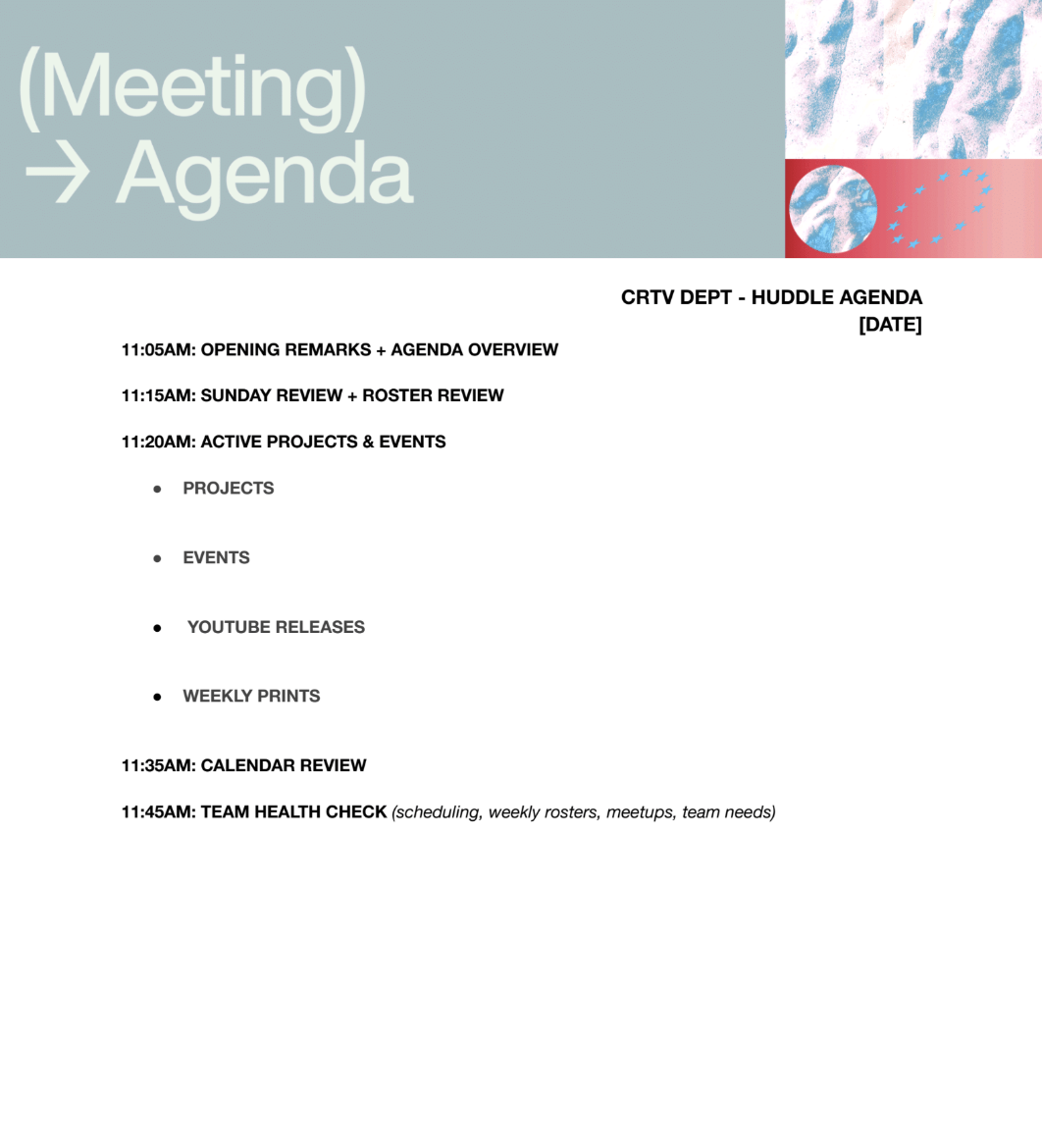
The Rhythms That Shape Our Teams
Beyond leadership structure and staff alignment, two key rhythms help sustain healthy teams across all VOUS locations on Sundays and before various events: Team Rally and Team Huddles.
Team Rally happens twice each Sunday across all locations. It is a moment for every servant leader to gather, receive encouragement, align around vision, and pray together before stepping into the service.
Throughout the week, our team prepares Huddle Notes centered on a value of the week and key moments in the life of the church. These notes equip teams with important updates and opportunities for people to invite, attend, and serve.

During every service, each team gathers for a Team Huddle within their ministry environment. These moments provide space for prayer, encouragement, and practical reminders before the team steps into serving.
Huddles also create an opportunity to share prayer requests and praise reports from teams across our church. These are submitted to our Care department and prayer teams so that people within our church can continue to be supported and prayed for throughout the week.
These rhythms may appear simple, but they serve an important purpose. Our prayer is that they ensure every servant leader feels seen, equipped, and spiritually supported before serving others.
Practical Takeaways
Every church context is different, but healthy leadership principles translate across environments. If you are looking to strengthen the culture and clarity of your teams, here are a few practical places to begin:
1. Create a clear leadership pathway.
Define the layers of leadership within your teams so people can see where they are and where they can grow.
2. Establish consistent team rhythms.
Moments like team rallies, huddles, and regular leadership gatherings help teams stay aligned spiritually and operationally.
3. Name your meetings with purpose.
When meetings are clearly defined and structured, leaders know what to expect and how to prepare.
4. Develop leaders intentionally.
Leadership development should never be accidental. Invest time in mentoring, training, and equipping the people who will carry the culture forward.
5. Reinforce the mission often.
Healthy teams are sustained by a shared “why.” Continually remind your teams that what they do matters and that their service helps bring people who are far from God close to Him.
Leadership systems may look different from church to church, but the heart remains the same: develop people well, steward culture carefully, and keep the mission at the center of everything you build.
Designing Culture That Lasts
Leadership is rarely built in moments of visibility. More often, it is formed quietly through intentional systems, consistent rhythms, and a commitment to developing people over time. For us, frameworks like the Builders Blueprint, leadership layers, and weekly meeting rhythms are not just systems. They are tools that help us steward the calling God has placed on our church. Every church will build differently, but the goal remains the same: to cultivate healthy leaders who build healthy teams and carry the mission forward. When leadership is clear, culture becomes strong, teams flourish, and the church is better positioned to do what it was always meant to do: bring people who are far from God close to Him.